
All purchases support the ministry of Spring Harvest
Order in stock items by 2pm for same day dispatch

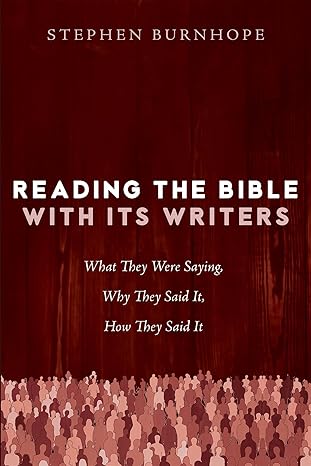
The Bible is a collection of sixty-six books, written by many different people over many hundreds of years. All of its writers lived in an ancient-world context and thought in ancient-world ways. But as Bible readers today, we live and think in the modern world–which is increasingly a postmodern world. Things that were “obvious” to them are not “obvious” to us, and vice versa. For Christians who want to be faithful to the Bible as the Word of God, the time and distance between then and now is a real challenge to navigate. Stephen Burnhope suggests that we won’t get it right by collapsing that gap–by just picking the text up and reading it. “The Bible says . . . [insert a verse]” is not enough. We will mishear both what the human authors were saying and what the divine author was saying. Reading the Bible well starts from reading it with its writers–understanding it as they understood it: what they were saying; why they said it; and how they said it. All of which is shaped and framed by the Bible’s “big themes” that, once we’re aware of them, we see running throughout, from cover-to-cover.
Buy Now
£25.00
Out of stock
Currently Unavailable
Additional information
| Weight | 0.5 kg |
|---|---|
| Format | Paperback |
| Pages | 238 |
The Bible is a collection of sixty-six books, written by many different people over many hundreds of years. All of its writers lived in an ancient-world context and thought in ancient-world ways. But as Bible readers today, we live and think in the modern world–which is increasingly a postmodern world. Things that were “obvious” to them are not “obvious” to us, and vice versa. For Christians who want to be faithful to the Bible as the Word of God, the time and distance between then and now is a real challenge to navigate. Stephen Burnhope suggests that we won’t get it right by collapsing that gap–by just picking the text up and reading it. “The Bible says . . . [insert a verse]” is not enough. We will mishear both what the human authors were saying and what the divine author was saying. Reading the Bible well starts from reading it with its writers–understanding it as they understood it: what they were saying; why they said it; and how they said it. All of which is shaped and framed by the Bible’s “big themes” that, once we’re aware of them, we see running throughout, from cover-to-cover.

Bestsellers
-
Sale!

How To Pray
Original price was: £14.99.£11.99Current price is: £11.99. -
Sale!

God on Mute (Revised)
Original price was: £12.99.£10.99Current price is: £10.99. -
Sale!

How To Hear God
Original price was: £14.99.£11.99Current price is: £11.99. -
Sale!

How to Pray: A Guide for Young Explorers
Original price was: £10.99.£8.99Current price is: £8.99. -

Dirty Glory
£12.99 -

Remaking the World
£21.99 -

Lydia
£10.99 -
Sale!

Brighter Days
Original price was: £12.99.£9.99Current price is: £9.99. -
Sale!

How to be (Un)Successful
Original price was: £12.99.£10.99Current price is: £10.99. -
Sale!

Into the Heart of Romans
Original price was: £19.99.£17.99Current price is: £17.99. -

Brian Doerksen Ultimate Collection (CD)
£13.03 -

Hymns for the Christian Life (CD)
£10.00
£25.00
Out of stock
Currently Unavailable
The Bible is a collection of sixty-six books, written by many different people over many hundreds of years. All of its writers lived in an ancient-world context and thought in ancient-world ways. But as Bible readers today, we live and think in the modern world–which is increasingly a postmodern world. Things that were “obvious” to them are not “obvious” to us, and vice versa. For Christians who want to be faithful to the Bible as the Word of God, the time and distance between then and now is a real challenge to navigate. Stephen Burnhope suggests that we won’t get it right by collapsing that gap–by just picking the text up and reading it. “The Bible says . . . [insert a verse]” is not enough. We will mishear both what the human authors were saying and what the divine author was saying. Reading the Bible well starts from reading it with its writers–understanding it as they understood it: what they were saying; why they said it; and how they said it. All of which is shaped and framed by the Bible’s “big themes” that, once we’re aware of them, we see running throughout, from cover-to-cover.
